What Is a Price Error? How Resellers Find and Flip Them
Price errors are retail mispricings that resellers flip for profit. Learn why they happen, how to catch them fast, and what happens after you buy.
 By The Lab TeamUpdated

In this guide
Every reseller has seen the screenshot: a $400 power tool ringing up at $40, a flagship phone listed for the price of its case. That is a price error — a retail mispricing the store never intended to offer — and catching one early is one of the fastest ways to turn a small bankroll into real margin. This guide covers what price errors are, why modern retail produces them constantly, and how resellers actually convert them into profit.
Why price errors happen
Retail pricing is automated, and automation fails in predictable ways. The biggest chains reprice thousands of SKUs a day across regions, channels, and promotions. Somewhere in that pipeline, a mistake slips through:
- Decimal and unit slips. A $1,299.00 listing becomes $129.90 because someone fat-fingered a repricing sheet, or a price-per-unit field gets read as price-per-case.
- Promo stacking. A percent-off code, a category markdown, and a clipped coupon were never tested together. Combined, they cut past the floor the merchandiser intended.
- Feed and sync failures. Marketplace listings inherit prices from a supplier feed. When a feed maps the wrong column or currency, entire catalogs go live mispriced.
- Clearance automation. Big-box markdown systems cut prices on a schedule. When a schedule misfires, an item skips three markdown steps at once.
- Currency and region mix-ups. International storefronts occasionally apply the wrong conversion, pricing in pesos what should have been dollars.
None of this is exotic. It is the boring, structural byproduct of scale — which is why price errors are not a one-time event you got lucky on, but a recurring pattern you can build a system around.
The important distinction: a price error is not always a consumer-side bargain. Sometimes it is a seller-side suppression event, like Amazon flagging an offer as a potential pricing error in Seller Central. Amazon says it detects potential pricing errors using factors like Marketplace Fair Pricing policy and seller-defined limits in its pricing-error help documentation, which is the same broad mechanism in reverse: the platform is trying to catch a price that looks out of line before buyers see it.
Price error, deal, or clearance markdown?
Resellers throw these words around interchangeably, but they behave differently and deserve different playbooks:
| Price error | Deal | Clearance markdown | |
|---|---|---|---|
| Intent | Unintentional | Planned promotion | Planned exit pricing |
| Typical window | Minutes to hours | Days to weeks | Weeks, in stepped cuts |
| Cancellation risk | Real | Minimal | Minimal |
| Competition | Whoever sees it first | Everyone | Local and patient |
| Margin potential | Highest | Modest | High if you know the cadence |
The window column is the one that matters. A planned deal will still be there after dinner. A price error gets corrected the moment a pricing analyst, a spike in orders, or an automated sanity check flags it. If clearance cadence interests you more than speed, start with clearance flipping at big-box stores — it is the patient cousin of price-error hunting.
If you are specifically hunting home-improvement clearance, the store-level plays split further: Home Depot clearance hunting is about back aisles, overheads, and penny tells; the Lowe's clearance aisle is about yellow tags, app scans, and policy traps.
How resellers actually find price errors
There are only a few honest ways to see a mispriced item before it disappears, and they stack:
- Communities and alert groups. A group of people watching different corners of retail will always out-spot an individual. The best groups verify before posting, so you are not chasing dead links.
- Monitors. Software that watches product pages and price feeds around the clock, then pushes a notification the moment something drops out of band. This is where the minutes-to-hours window becomes winnable — a monitor does not sleep through a 2 a.m. repricing job.
- Manual pattern hunting. Sorting categories by discount percentage, watching for weird decimals, checking newly listed items after big promo launches. Free, educational, and slow — good for learning what "wrong" looks like.
- Post-mortem reading. When an error goes viral after the fact, read the thread. How was it found? Which retailer? What time did it die? You are reverse-engineering the next one.
Most serious resellers run a combination: monitors for speed, a community for coverage and verification, and enough manual reps to develop instinct. If you want the deeper mechanics of the notification side — latency, filtering, and why most free alert channels are already too late — read how to get price error alerts before everyone else.
What happens after you order
Ordering is the easy part. What separates practiced resellers from tourists is knowing the aftermath:
- Cancellation is common and fine. Retailers cancel a large share of obvious-error orders. You lose nothing but the authorization hold. Order, then let the retailer decide — do not talk yourself out of a purchase that costs nothing to attempt.
- Shipped is usually kept. Once an item ships, most retailers eat the mistake rather than claw it back. Fast-shipping retailers and in-store pickup orders survive at much higher rates.
- Pickup beats shipping when the window is short. An in-store pickup order confirmed before the price corrects often gets honored at the register.
- Quantity discipline pays. Ordering three units looks like a customer. Ordering forty units of a mispriced generator looks like a problem and invites cancellation of the whole batch.
- Know the resale floor before you buy. A price error is only profit if the exit exists. Check sold listings, not asking prices, and subtract fees and shipping before deciding it is worth your capital.
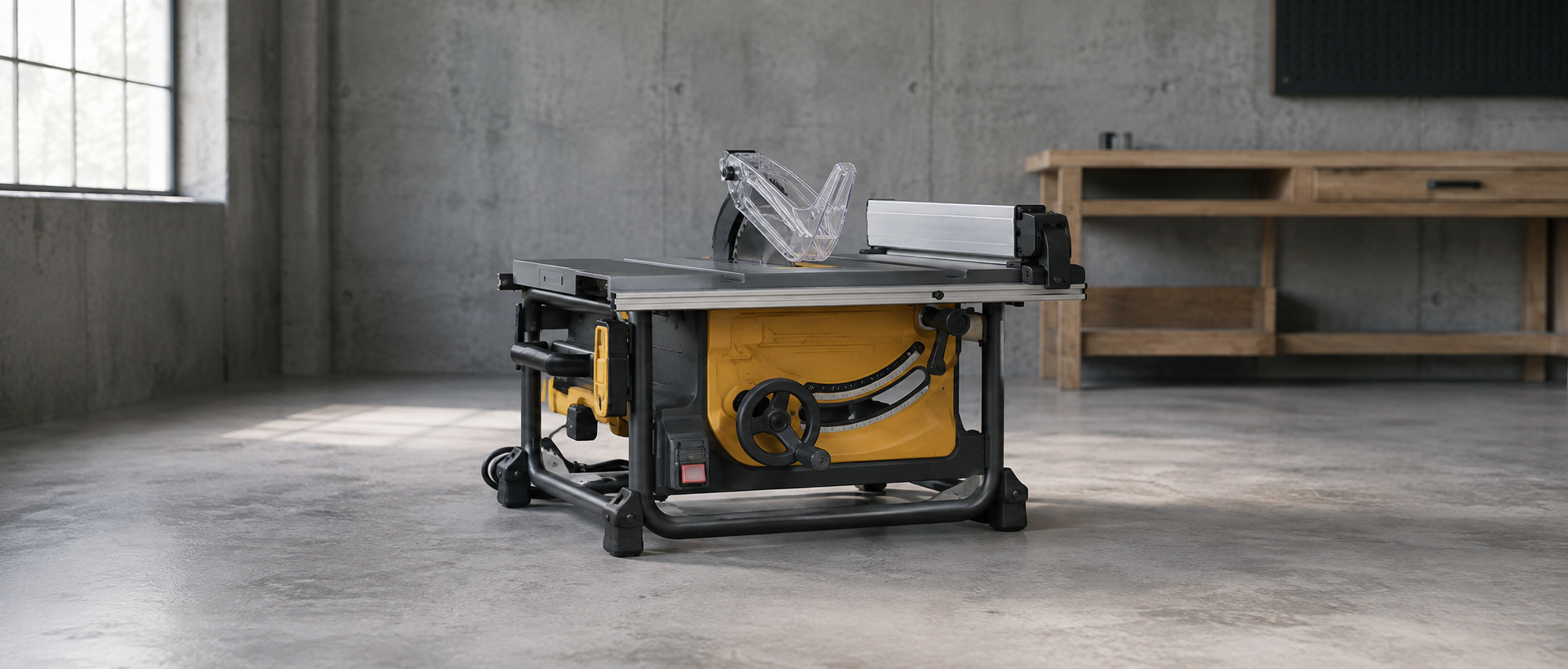
For a concrete shipped example, read the DEWALT table saw price error case study — it shows the full path from Amazon monitor alert to delivered boxes and resale planning.
Treat every error as a probability, not a promise. Enough attempts at good prices, and the honored orders pay for the cancelled ones many times over.
Retailer terms back up that caution. Home Depot says local store prices may vary and inventory levels are not guaranteed in its site footer, and its terms of use discuss correcting price errors. Lowe's terms say an order acknowledgment is not acceptance and that inaccurate item information can lead to cancellation and refund. Walmart's listing-error help page is even more direct: if it catches a listing error while processing an order, it can cancel the order. None of that means you should avoid price errors. It means your workflow should assume cancellation is normal until the item is in hand.
Which price errors are worth acting on
Speed matters, but not every wrong price deserves a checkout. Use a fast filter:
| Filter | Good signal | Bad signal |
|---|---|---|
| Discount depth | Clearly below normal street price, but not absurd enough to invite instant manual review | A $2,000 item listed for $2 with no pickup path |
| Fulfillment | Pickup today, ship-from-store, or fast warehouse handling | Freight, backorder, third-party marketplace ambiguity |
| Exit market | Recent sold comps, compact shipping, recognizable brand | No sold history, huge dimensions, parts-only demand |
| Account risk | Normal quantity and ordinary customer behavior | Carting dozens of units or manipulating checkout |
| Verification | Other buyers reach confirmation or pickup stage | Dead cart, image mismatch, wrong item title |
The best price error is boring after checkout: ordinary quantity, obvious SKU, clear resale floor, and fulfillment fast enough that the correction lands after your order moves.
The speed game, honestly stated
Here is the uncomfortable truth about price errors: information decays in minutes. By the time a mispriced listing hits a big public forum, thousands of people have seen it, stock is gone, or the price is fixed. The profitable window belongs to whoever compresses the pipeline from error goes live to order placed.
That pipeline has three segments you can control:
- Detection — how fast the error is spotted. Monitors and tight communities win here.
- Verification — is it real, in stock, orderable? Groups that verify save you from wasting the window on duds.
- Execution — accounts logged in, payment saved, addresses ready. Thirty seconds of checkout friction is the difference between shipped and sold out.
The Lab exists to compress the first two segments: in-house monitors watching retail around the clock, and a vetted community that verifies before it pings. If you would rather be early than lucky, join The Lab and put the detection problem on autopilot.
Quick-start checklist
If you are brand new to price errors, do these five things this week:
- Set up accounts (with saved payment and addresses) at the five retailers you buy from most.
- Join at least one alert community and turn on notifications for its error channel.
- Learn to read sold prices on your resale platform of choice so you can value an item in under a minute.
- Practice one dry run: from alert to checkout page, timed. Find your friction and remove it.
- Read the cancellation and price-accuracy policy of your two favorite retailers, so an email from them never surprises you.
Price errors reward preparation far more than luck. Build the system once, and every future mistake a retailer makes is a door you are already standing next to.