DEWALT Table Saw Price Error: From $369 to $75
A DEWALT table saw price error dropped the DWE7485 to $75.12. Here is how The Lab alert turned into delivered orders and resale profit.
 By The Lab Team
In this guide
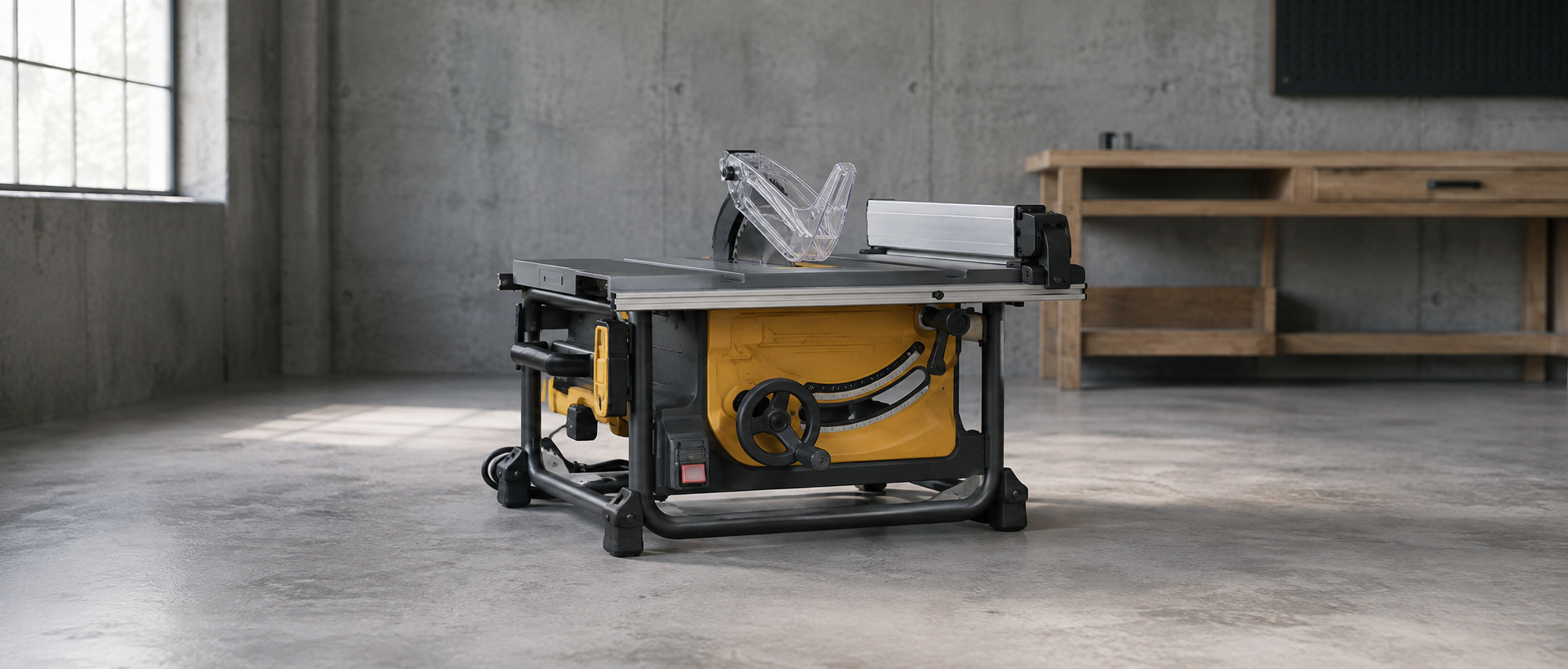
A DEWALT table saw price error is exactly the kind of alert resellers wait for: recognizable brand, compact enough to move, real demand, and a buy price so far under normal retail that the exit math becomes obvious fast. On June 16, 2026, The Lab's Amazon monitor caught the DEWALT 15 Amp 8-1/4 in. Compact Portable Jobsite Table Saw (DWE7485) at $75.12.
| Alert price | Previous price | Average price | Discount |
|---|---|---|---|
$75.12 |
$369.00 |
$329.00 |
77.17% |
That is not a coupon deal. That is a pricing error with room for a full resale play.
The alert that started it
The alert came through The Lab's Amazon monitor at 6:24 PM with the core details a reseller needs before clicking:
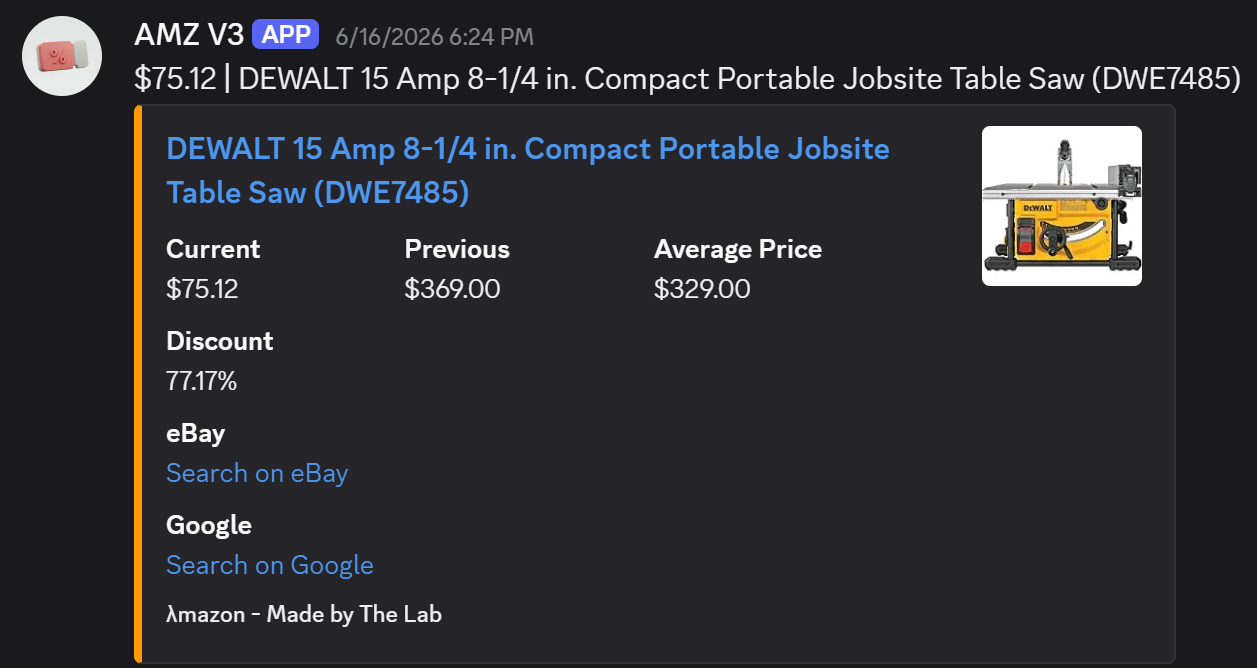
| Signal | What the monitor showed |
|---|---|
| Product | DEWALT 15 Amp 8-1/4 in. Compact Portable Jobsite Table Saw (DWE7485) |
| Current price | $75.12 |
| Previous price | $369.00 |
| Average price | $329.00 |
| Discount | 77.17% |
| Shortcuts | eBay and Google search links for fast comping |
That last row matters. A fast alert is only useful if it compresses the buy/no-buy decision. The monitor did not just say "run." It gave members the price gap and the research path in the same message, so they could check the resale market while the Amazon listing was still live.
For a normal shopper, the question is "Do I need a table saw?" For a reseller, the question is different: "Can I buy this safely below the resale floor before the correction lands?" The answer here was yes for members who moved quickly.
If you are new to this kind of window, start with what a price error is. The important idea is that price errors are probability plays. Some cancel. Some ship. The edge is getting enough high-quality attempts in before public traffic kills the listing.
Why this one was actionable
Most alerts are not automatic buys. A $75 power tool still needs a clean exit, and a table saw is not as effortless as a phone case or a video game. The DEWALT DWE7485 worked because several pieces lined up at once:
- Recognizable demand. DEWALT is a known jobsite brand, and the DWE7485 is a mainstream compact table saw, not an obscure parts SKU.
- Huge spread to normal pricing. The monitor showed
$75.12against a$369.00$329.00average price, leaving room for fees, shipping, local negotiation, and undercutting. - Simple product story. Buyers understand what it is. A compact jobsite saw does not require a long explanation on eBay or Facebook Marketplace.
- Multiple exit channels. Members could evaluate Amazon, eBay, and local marketplace demand instead of depending on one platform.
- Fast fulfillment signals. Once orders moved from placed to arriving, the risk profile changed from "maybe cancelled" to "inventory inbound."
The number to remember is not just 77.17%. The sharper number is the dollar gap: the $75.12 alert price sat $253.88 under the $329.00 average shown in the monitor. That gap is why members could think in terms of resale profit instead of personal-use savings.
Orders moved from pending to arriving
The hard part with Amazon pricing errors is not checking out. It is waiting to see whether the order survives. Retailers can cancel obvious errors, and many do. That is why experienced resellers watch the status progression closely: pending, preparing, shipped, arriving, delivered.
In this case, member screenshots showed the saws moving into Amazon delivery status. That changed the conversation inside the community. At that point, the deal was no longer just a monitor screenshot. It was turning into physical inventory.
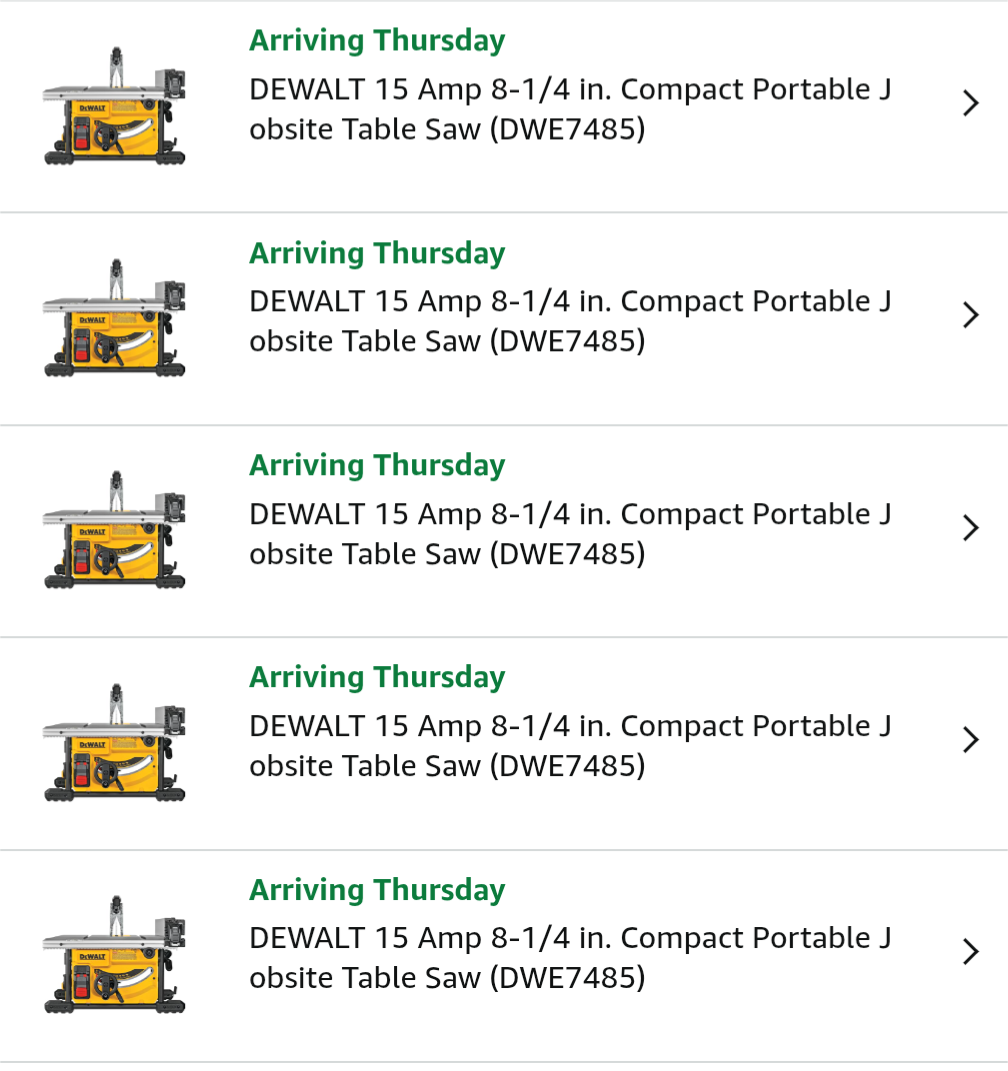
This is where speed from price error alerts becomes practical instead of theoretical. The alert gets you to checkout. The follow-up chatter tells you whether other members are seeing confirmations, movement, cancellations, or deliveries. One person sees a status change; everyone else can update their expectations.
That shared feedback loop is why private communities beat isolated hunting. You are not only buying from the alert. You are reading the order flow after the alert.
Then the boxes started landing
The next phase was the proof that matters: delivered boxes.
Members posted stacks of DEWALT DWE7485 saws arriving at homes and garages. Across the community, that meant dozens of units made it through the error window and turned into actual inventory. Some buyers had a few. Others had large stacks. The important point is not the exact count per person. It is that the deal crossed the line from theoretical spread to sellable product.
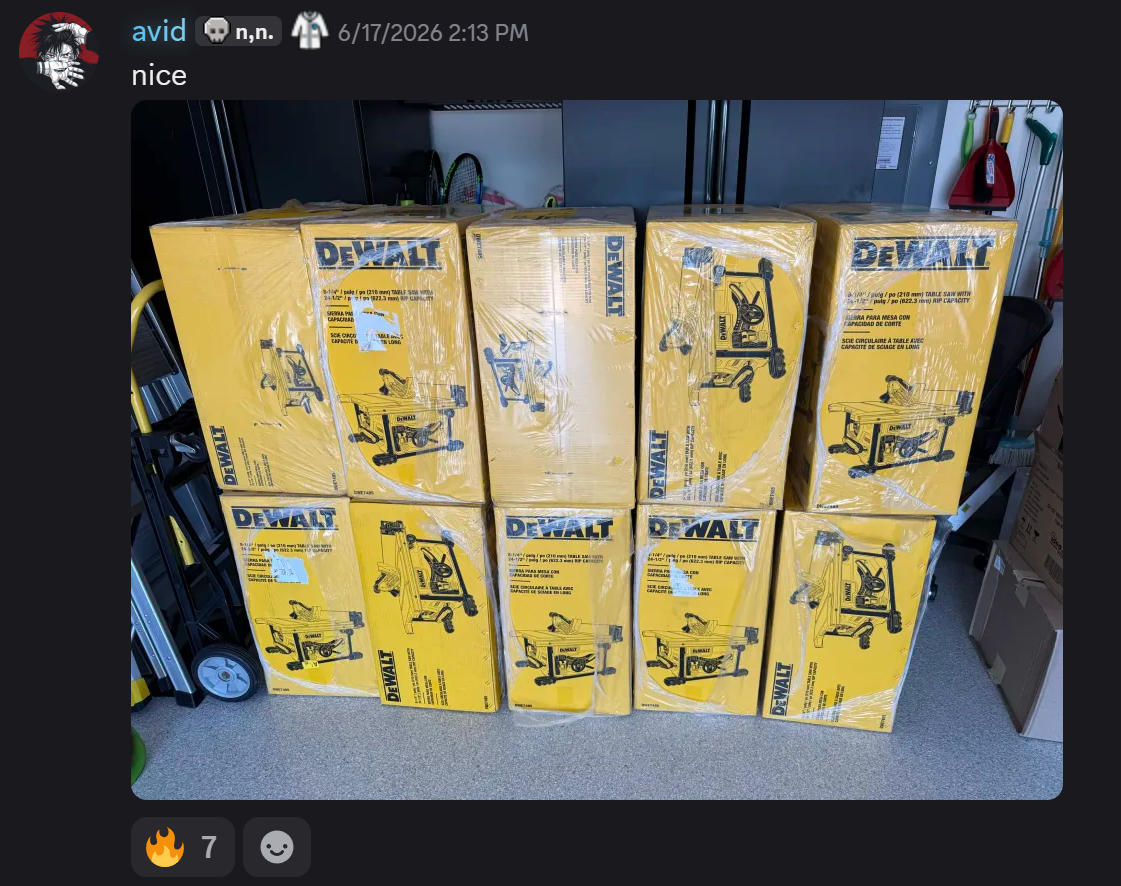
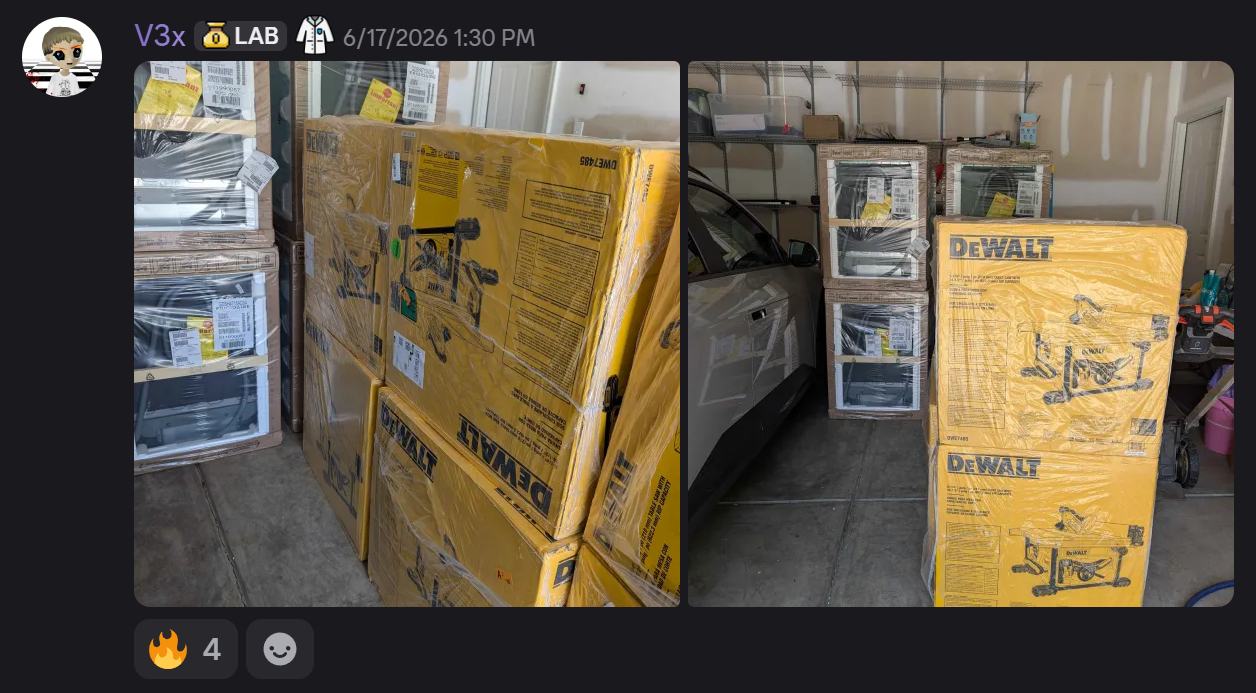
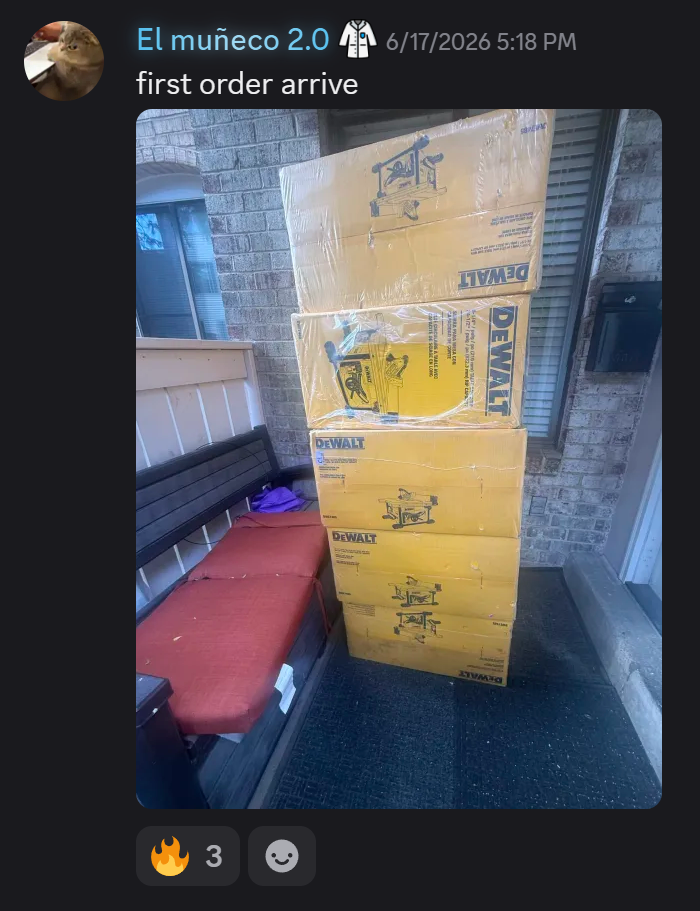
This is the moment most public deal posts never show. Screenshots of the wrong price are easy. Delivered inventory is the difference between "nice find" and "real flip."
How members thought about the flip
The resale play was straightforward because the saw had more than one exit. Members could choose the channel that fit their account, location, and tolerance for shipping:
| Exit channel | Why it made sense | Watch-outs |
|---|---|---|
| Amazon | Strong buyer intent and fast sell-through when an account can list the item | Category, brand, condition, and seller eligibility can block or limit the play |
| eBay | Broad buyer pool and easy sold-comp research | Fees, shipping cost, box damage, and return risk need to be priced in |
| Facebook Marketplace | Local buyers avoid shipping and may want tools quickly for work or home projects | More messages, meetups, negotiation, and local demand variance |
The cleanest route depends on the unit and the seller. A sealed box in good condition has more options than a battered one. A seller already approved on Amazon has a different path than a casual flipper. A buyer with strong local demand can avoid shipping entirely and still leave the next owner with a discount under normal retail.
This is why the monitor included eBay and Google search links. The alert was not only about buying. It was about getting to resale comps fast enough to decide quantity before the listing died.
The lesson from the DEWALT deal
The DEWALT table saw error worked because the three pieces of a good price-error workflow were all present:
- Detection: the Amazon monitor caught a
$75.12price that was wildly out of band against recent and average pricing. - Execution: members were able to place orders while the listing was still live.
- Exit planning: the product had credible resale routes through Amazon, eBay, and Facebook Marketplace once units landed.
Leave out any one of those and the story changes. Detect it late and the listing is gone. Buy without checking comps and you might own bulky dead inventory. Get delivery but choose the wrong exit and fees can eat the margin.
The real edge is the system around the alert. The monitor finds the misprice. The community validates order movement. The resale experience tells members when to hold, list, ship, or move locally. That is the difference between seeing a screenshot after the fact and having boxes on the floor. If you want the next one while it is still actionable, join The Lab and put the monitor feed to work before public deal traffic arrives.
A simple post-alert checklist
Use this deal as the model for the next one:
- Check the current price against the previous and average price, not just the discount percentage.
- Search sold comps before scaling quantity.
- Prefer products with more than one exit channel.
- Watch order status updates from other buyers.
- Treat cancellation as normal until the item ships or lands.
- Once delivered, list quickly while demand is still fresh and public attention has not fully caught up.
Price errors do not need perfect certainty. They need enough spread, enough speed, and enough discipline. The DEWALT DWE7485 drop had all three.